Start with a real-life situation
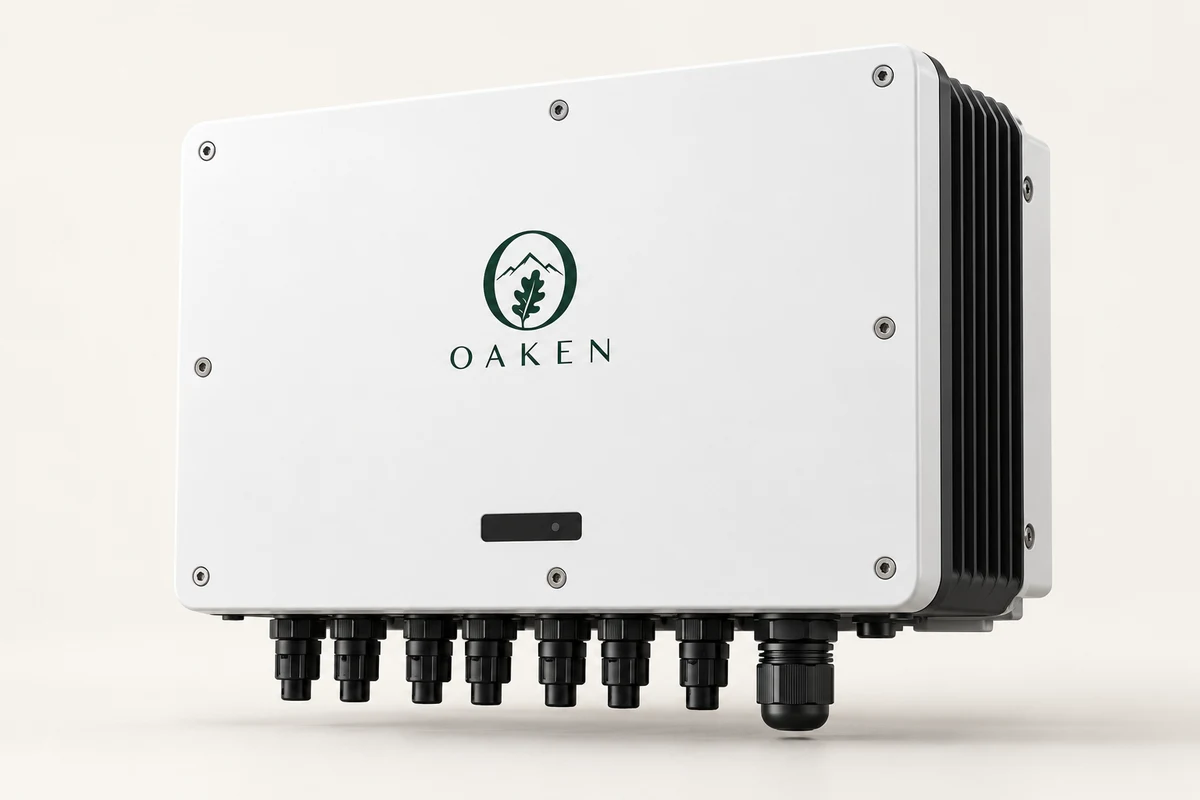
Two arrays can have the same DC power, yet one may exceed the inverter voltage or current limits. Modules in series and strings in parallel affect different limits.
LEARN BY EXPLORING
See the energy path
Try day, night and a grid outage

Solar may cover part of demand; the grid share depends on actual production and consumption.
Learning diagram, not wiring or installation instructions.1. Series versus parallel
In a string of compatible modules, series voltages add. Parallel strings increase current. This explains the concept only; string counts and protection require professional calculation and review.
2. Include temperature effects
Open-circuit voltage can rise in cold conditions; the inverter maximum DC voltage must not be exceeded. Hot operating voltage must remain in the applicable MPPT range. Use supported cell-temperature assumptions, coefficients and actual limits, not guessed approval values.
3. MPPT and input limits
MPPT tracks the array operating point; more trackers are not automatically better for every roof. Match input current, short-circuit current, string counts and orientation/shading to the exact input architecture. Obtain a reviewed string schedule.
Check before deciding
- Voc, Vmp, Isc, Imp and temperature coefficients
- MPPT range and maximum DC voltage
- Exact-model current and input architecture
CHECK YOUR UNDERSTANDING
A quick knowledge check
Sources & scope
Named technical review has not yet been recorded.
Preliminary guidance. Structural, safety and construction approval requires the responsible engineer and final model documents.