Start with a real-life situation
It is noon and the panels are producing. Would your lights stay on if the grid failed? The answer depends on the system architecture, not just the panel count.
Night or a power cut? They are different.
Change both settings to see what powers your appliances.
Conventional grid-tied, no battery
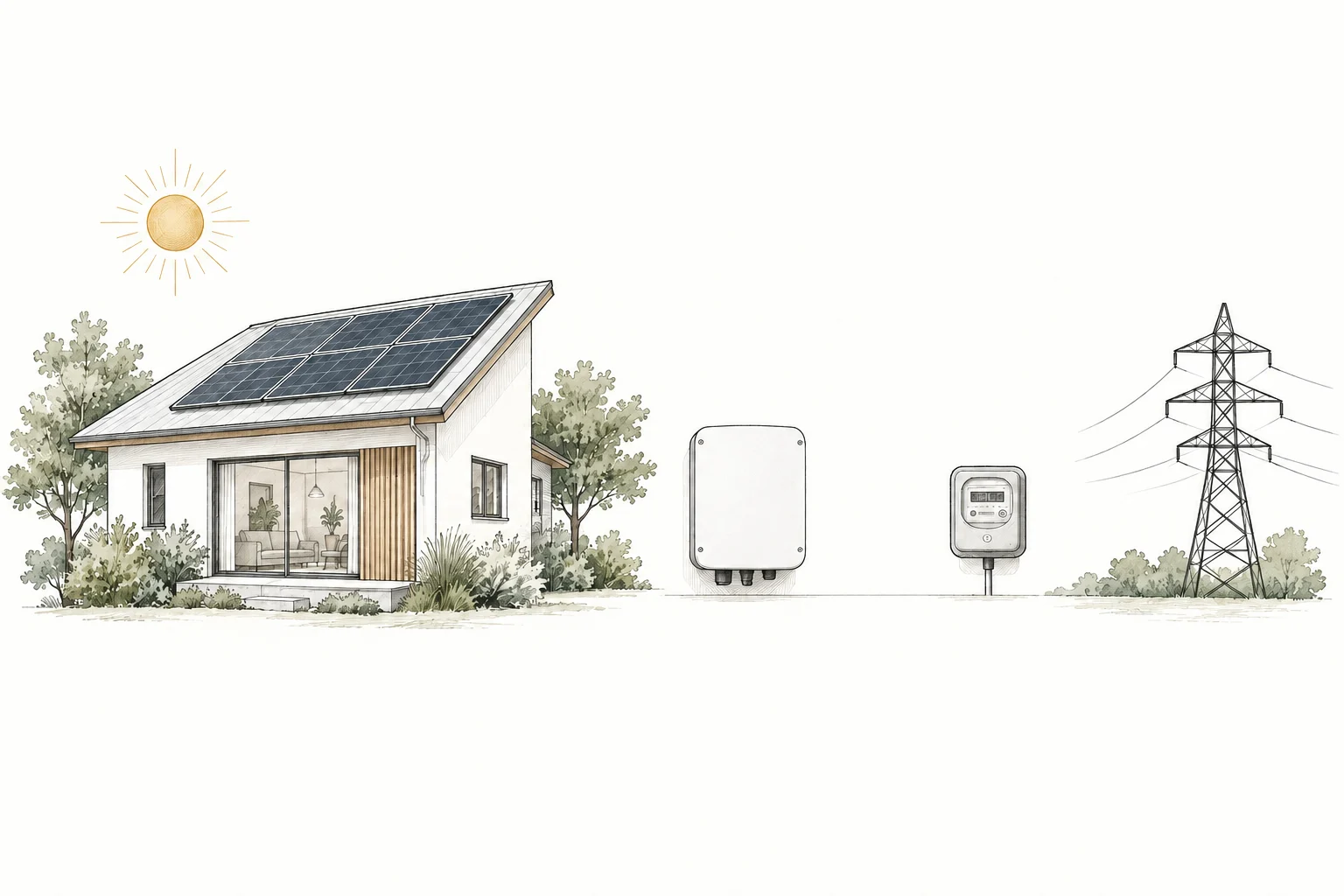 Home appliances have power
Panels generate in daylight. Solar supplies the home and the grid covers any shortfall. Exporting surplus depends on the agreement and permissions.
Battery system with a working backup circuit
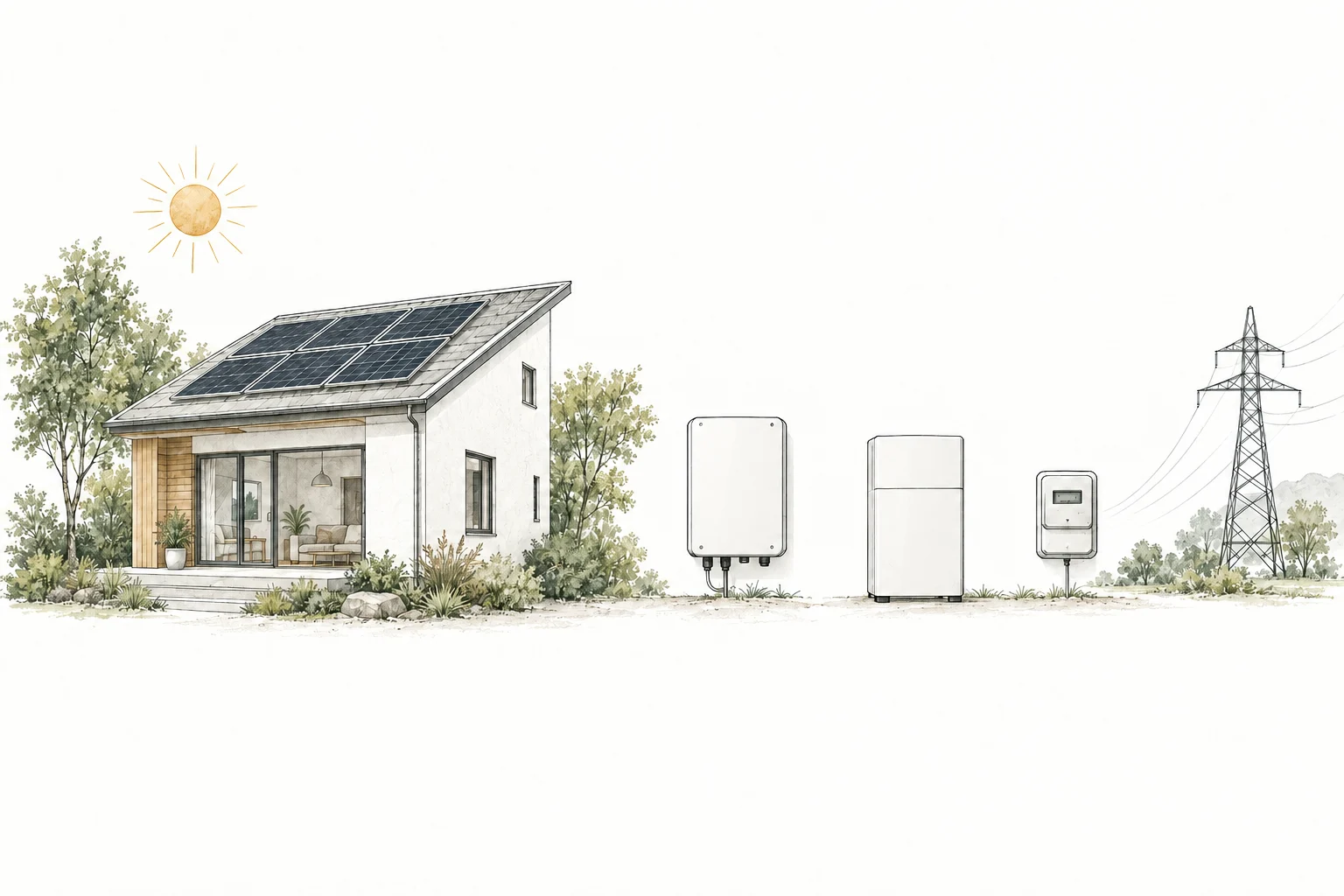 Home appliances have power
Solar can power appliances and charge the battery. The grid can help when generation or charge is insufficient; settings determine the priorities.
The “hybrid” label alone does not guarantee outage backup. Check the inverter, compatible battery, safe isolation and backup circuit. This is a learning illustration, not an installation drawing.
1. When the grid is available
Modules produce DC and the inverter converts it to AC. Consumption and export depend on the design and connection permission. Inverter capacity, phases and output voltage must suit the site; a larger rating alone is not a better choice.
2. What does a battery add?
Storage can shift energy use to another time. Backup also needs the right output, continuous and surge capability, safe isolation and control. Models and variants can differ, so request the exact datasheet.
3. Where should selection start?
Use site records to identify the supply; do not guess. Record the goal, essential loads and required duration. Unknown supply or battery details remain “needs review”. OAKEN comparison highlights these gaps; it does not approve an installation.
Check before deciding
- Grid phases and voltage
- Backup output on the exact variant
- Manufacturer-approved battery and BMS
CHECK YOUR UNDERSTANDING
A quick knowledge check
Sources & scope
Named technical review has not yet been recorded.
Preliminary guidance. Structural, safety and construction approval requires the responsible engineer and final model documents.