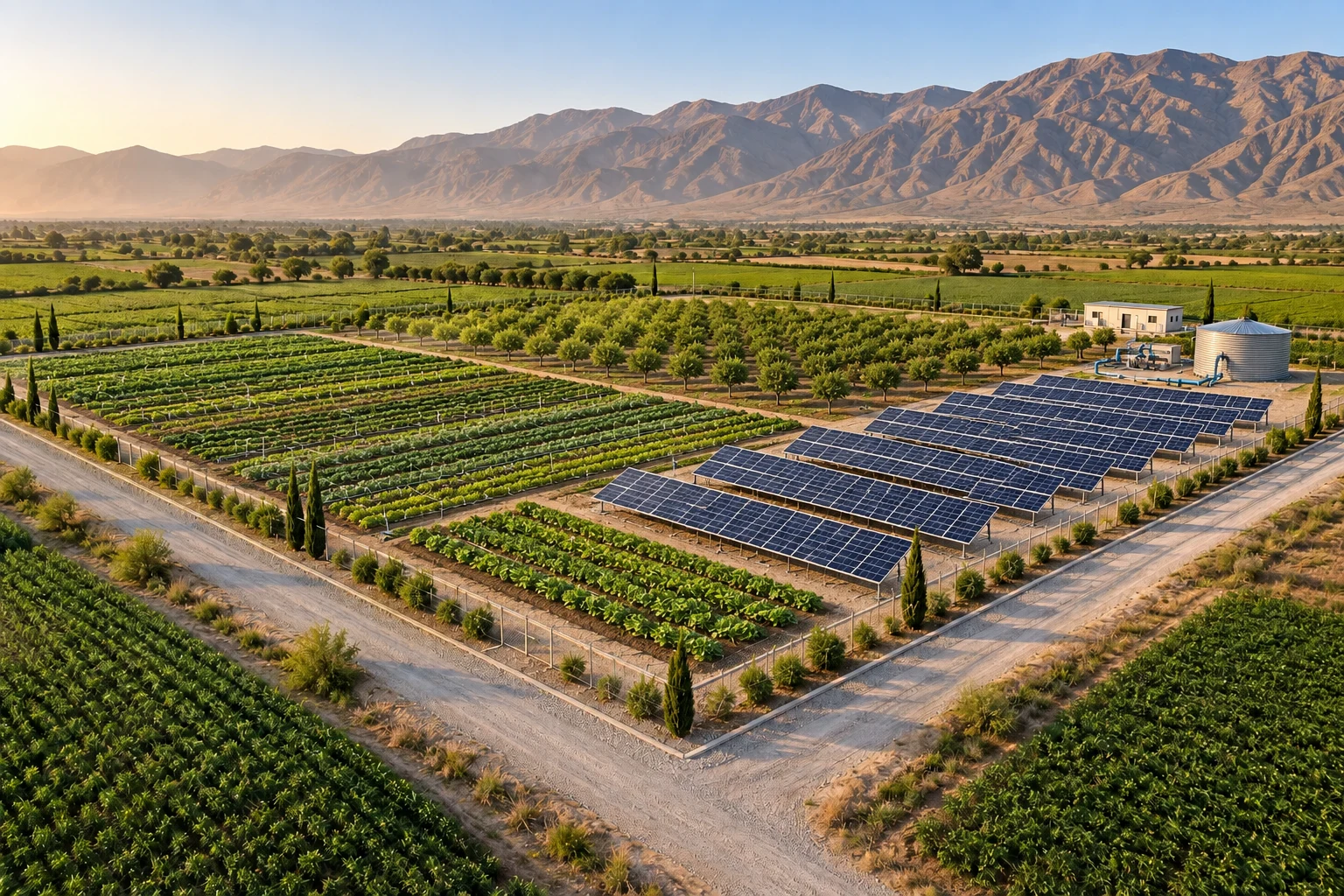
Start with a real-life situation
Two farms may need the same water volume but have different water depths and pipe lengths. Selecting by horsepower alone misses those differences.
1. Water volume is not flow rate
Record daily water volume alongside irrigation hours. Flow is volume per unit time. Where a tank is feasible, water storage may form part of the operating plan, subject to project conditions and water quality.
2. Total head and pump curve
Elevation is only part of the requirement; pressure demand and pipe losses matter too. Check the duty point against the pump curve. Motor rating does not guarantee site flow. A pumping specialist must assess the final selection.
3. Motor, drive and protection
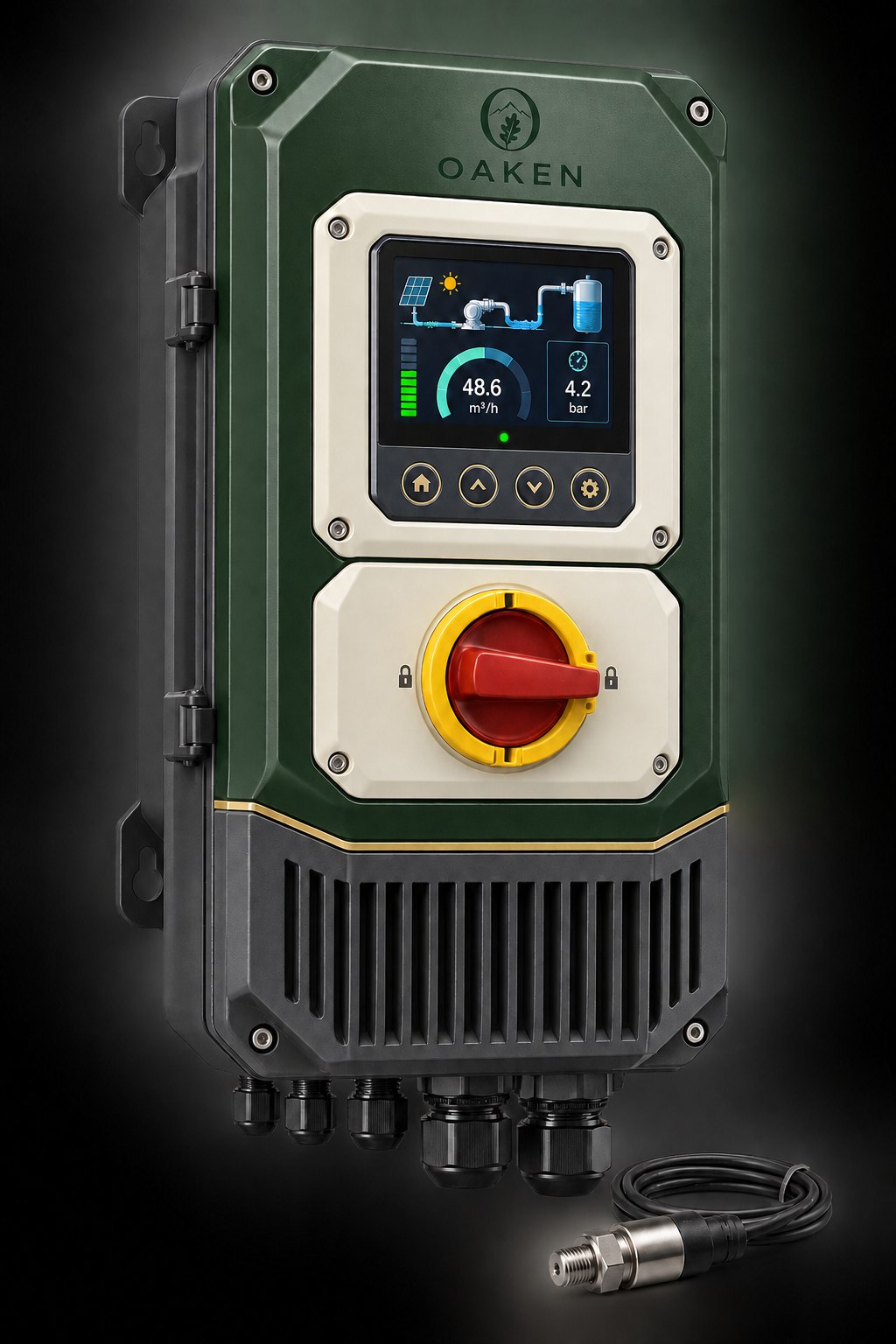
Identify motor type/voltage, drive operating range, dry-run protection and any grid/generator support. Reduced sunlight can change pumping performance. Match array, drive, motor and water demand rather than simply adding modules.
Check before deciding
- Flow and daily water volume
- Total head and pump curve
- Motor nameplate and drive data
CHECK YOUR UNDERSTANDING
A quick knowledge check
Sources & scope
Named technical review has not yet been recorded.
Preliminary guidance. Structural, safety and construction approval requires the responsible engineer and final model documents.