Start with a real-life situation
The sun is shining, but the neighbourhood has lost power. Rooftop production does not mean it is safe to energize an isolated grid. First ask whether your system is designed for independent operation or grid-only use.
Night or a power cut? They are different.
Change both settings to see what powers your appliances.
Conventional grid-tied, no battery
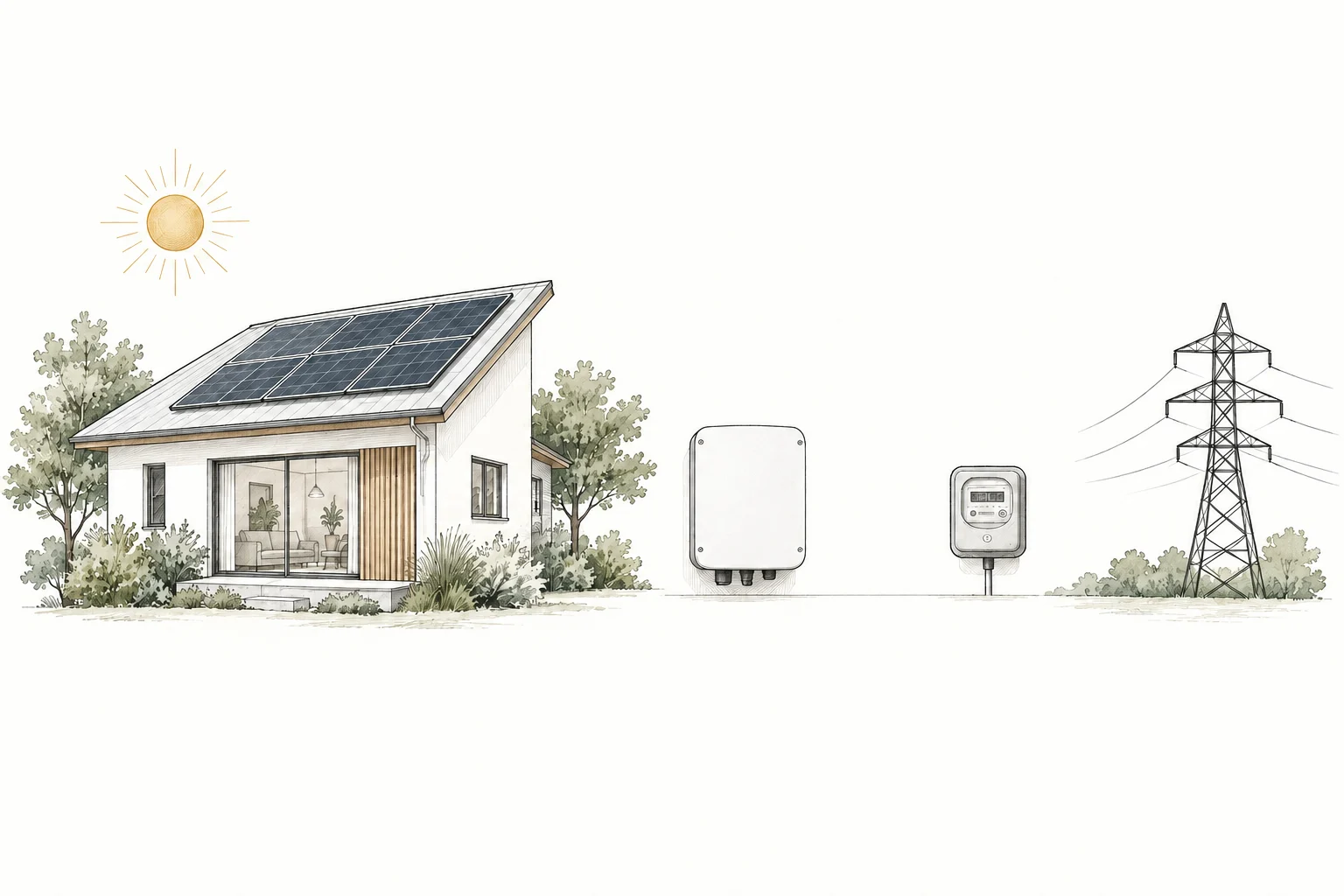 Home appliances have power
Panels generate in daylight. Solar supplies the home and the grid covers any shortfall. Exporting surplus depends on the agreement and permissions.
Battery system with a working backup circuit
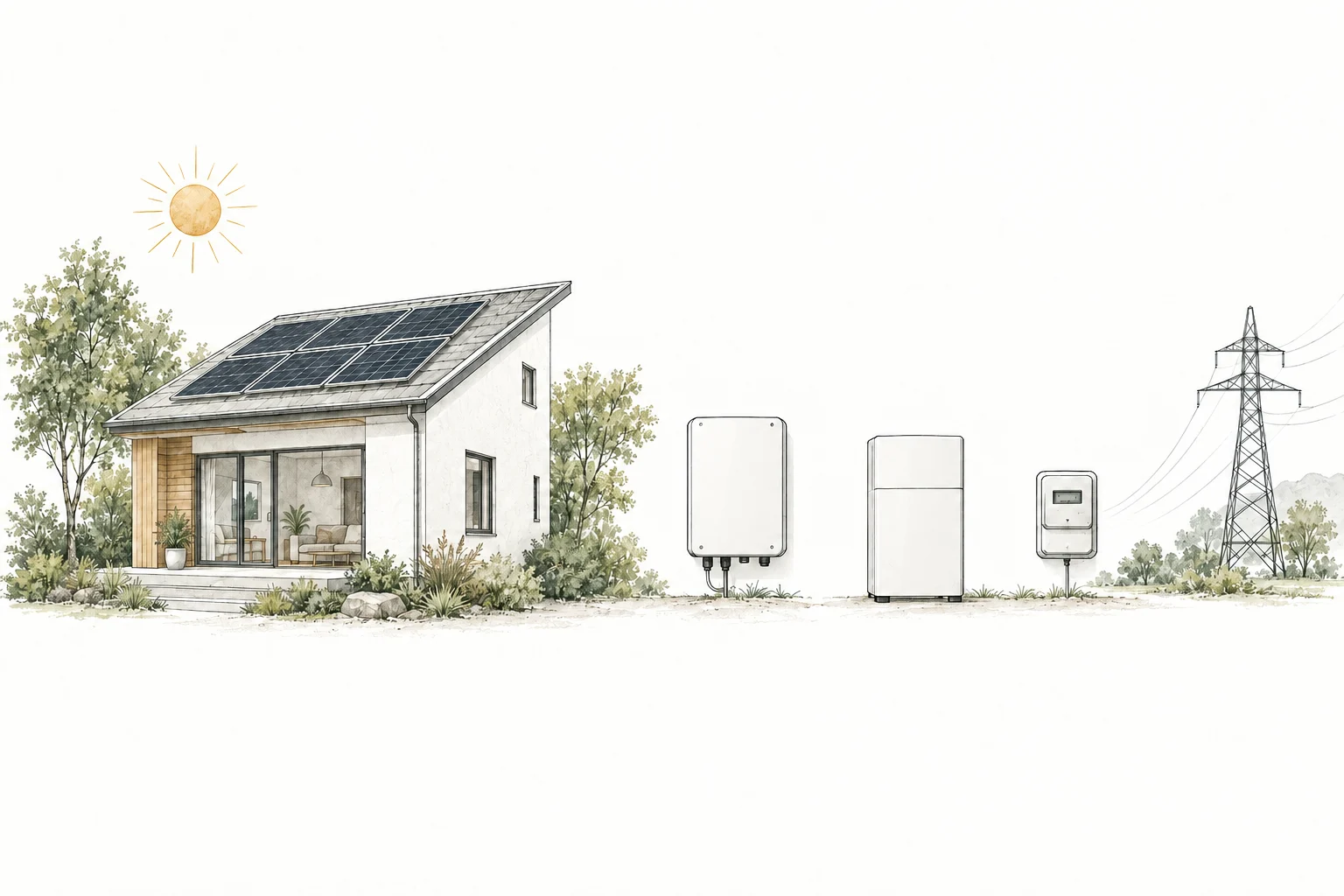 Home appliances have power
Solar can power appliances and charge the battery. The grid can help when generation or charge is insufficient; settings determine the priorities.
The “hybrid” label alone does not guarantee outage backup. Check the inverter, compatible battery, safe isolation and backup circuit. This is a learning illustration, not an installation drawing.
1. Protecting people and the grid
Ordinary grid-connected systems stop feeding a failed grid. Independent output requires approved equipment and isolation. Never bypass protection to force continued supply; qualified professionals must assess and implement the design.
2. Whole home or essential loads?
Separate essential lighting and communications from high-demand loads. Motors, refrigerators and pumps may draw more at start-up. A list with power, quantity and operating time is more useful than simply asking for whole-home power.
3. For how many hours?
For a steady load, energy equals power multiplied by time. Actual demand, losses, discharge limits, reserve and varying solar production affect the result. Estimate the need in the lab, then assess battery capacity and inverter power separately.
Check before deciding
- Essential-load list
- Starting demand and simultaneous loads
- Outage duration and required reserve
CHECK YOUR UNDERSTANDING
A quick knowledge check
Sources & scope
Named technical review has not yet been recorded.
Preliminary guidance. Structural, safety and construction approval requires the responsible engineer and final model documents.